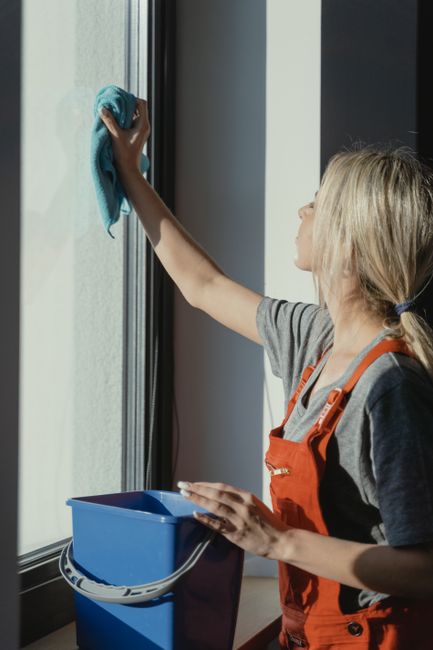
Why Your Gold Coast or Brisbane Home Gets Dusty So Quickly
Gold Coast and Brisbane homes collect dust faster than most people expect because of the combination of sea air, open-plan architecture, Queensland's distinct dry and wet seasons, and the warm temperatures that accelerate the biological activity in settled dust. Understanding why dust accumulates helps explain what reduces it and why consistent maintenance matters more than occasional intensive cleaning.
Green Wave Cleaning Team
Gold Coast & Brisbane
Gold Coast and Brisbane homes collect dust faster than most people expect, and faster than equivalent homes in cooler or less coastal climates. The reasons are a combination of location, architecture, climate, and biology. Once you understand why, the cleaning approach that actually keeps dust under control becomes obvious.
Contents
- What household dust actually is
- Why Queensland homes accumulate dust faster
- The dry season effect — August through October
- Open-plan architecture and dust movement
- Dust mites in Queensland conditions
- Why dust matters beyond appearance
- What regular cleaning does about it
- Regular cleaning costs less than you think
- What you can do between professional cleans
- When we are not the right fit
- Frequently Asked Questions
What household dust actually is
Household dust is not a single material. It is a mix of fine particles that varies depending on the location, the household occupants, and the season.
The typical composition in an Australian home includes: skin cells shed by people and pets (the primary component), fine textile fibres from clothing, bedding, and soft furnishings, soil and particulate matter tracked in from outside, pollen particles that enter through open windows and doors, mould spores, dust mite fragments and their waste matter, and, in coastal areas like the Gold Coast, fine salt particles from sea air.
The reason this mixture matters is that it is not inert. Each component has different health implications depending on the concentrations and the sensitivities of the people in the household. Dust mite waste is one of the most common indoor allergen triggers in Australia. Mould spores in household dust contribute to the indoor mould load. Fine particles generally contribute to the particle concentration in indoor air.
See indoor air quality and cleaning — what most people get wrong for the full picture on what settled household surfaces mean for the air quality in a Queensland home.
Why Queensland homes accumulate dust faster
Several factors combine to make dust accumulation in Gold Coast and Brisbane homes faster than the national average.
Coastal sea air on the Gold Coast. Sea air carries fine salt particles that deposit on horizontal surfaces: window sills, television tops, furniture, ceiling fan blades, and the tops of picture frames and shelves. Salt particles are fine, light, and numerous. In a Gold Coast home with windows regularly open to sea breezes, this salt deposition is constant and contributes meaningfully to the rate at which surfaces appear dusty.
Warm temperatures accelerate biological processes. The biological components of dust, specifically dust mite populations, mould spore production, and the decomposition of organic particles in settled dust, all proceed faster in warm conditions. In a Brisbane or Gold Coast home where temperatures are above 20 degrees for most of the year, these biological processes run significantly faster than in cooler southern cities. The result is that settled dust in a Queensland home is more biologically active than the same volume of dust in Melbourne or Hobart.
Queensland building style. Gold Coast and Brisbane homes are typically built with high ceilings, large open-plan living areas, louvred windows, and extensive use of ceiling fans. These features are well adapted to the climate but they also move air through the home in ways that distribute fine particles over large areas rather than containing them. A ceiling fan running in a dusty room redistributes the settled dust and keeps it airborne until it settles on new surfaces.
Renovation and construction activity. Both cities have ongoing construction activity across their residential areas. Fine construction dust from nearby building work enters homes that are otherwise clean and contributes to faster surface deposition. This is pronounced during the dry season when there is less rain to settle outdoor dust before it enters homes.
The dry season effect — August through October
August, September, and October are the months when most Gold Coast and Brisbane households notice dust accumulating fastest. This is not a coincidence.
The dry season reduces humidity to between 40 and 60 percent during this period. In lower humidity, dust particles are less likely to clump and settle quickly. They stay airborne longer, travel further, and redistribute more easily when disturbed. The same amount of particle generation in a 40 percent humidity environment produces more visible surface dust than in the 70 to 80 percent humidity of the wet season, where particles absorb moisture and settle faster.
The Bureau of Meteorology records September as consistently the driest month in both Gold Coast and Brisbane, with minimum humidity values regularly below 35 percent. This is the peak dust-accumulation period of the year for most households.
The spring transition also brings wind. September winds on the Gold Coast can carry fine soil and pollen particles from Queensland's drier inland areas toward the coast. Households near parks, open land, or in less established suburban areas will notice this more than inner-city apartments.
Open-plan architecture and dust movement
The architecture common in Gold Coast and Brisbane homes is designed for cross-ventilation in a subtropical climate. Large open-plan living areas, high ceilings, louvred windows, and minimal internal walls allow air to flow through the home. This works exactly as intended for comfort and humidity management.
It also means that dust generated anywhere in the home, particularly in high-activity areas like the kitchen and living room, is not contained. It circulates through the full connected space and eventually settles on every horizontal surface throughout the home.
Ceiling fans, which most Queensland homes run for much of the year, are effective at keeping rooms comfortable but they keep fine dust particles airborne between cleaning visits. A ceiling fan running above a dusty floor redistributes settled floor dust onto furniture and shelves rather than allowing it to settle permanently in one place.
This is structural. The architecture that makes Queensland homes pleasant to live in also means dust accumulates on more surfaces than it would in a compartmentalised home with lower ceilings.
Dust mites in Queensland conditions
Dust mites are microscopic organisms that live in bedding, upholstered furniture, carpets, and soft furnishings. They feed on shed human skin cells, which are a primary component of household dust. Their waste matter is one of the most significant indoor allergen triggers in Australia and the primary trigger for dust-related asthma in children.
Dust mites require warm temperatures and moderate to high humidity to thrive. In Queensland, these conditions exist for most of the year:
- Temperature range optimal for dust mite reproduction: 18 to 27 degrees Celsius. Gold Coast and Brisbane are within this range for most of the year.
- Humidity range optimal: 70 to 80 percent. This is present throughout the wet season, November to April, and in bathroom and bedroom environments for much of the year.
The Australasian Society of Clinical Immunology and Allergy notes that dust mite exposure is the most common allergen trigger in Australian homes and that Queensland's warm, humid climate is particularly supportive of high dust mite populations.
Regular vacuuming of carpets, mattresses, and soft furnishings removes dust mite populations before they reach the levels where exposure causes symptoms. Washing bedding weekly in warm water reduces the dust mite population in beds. Keeping dust generally low through regular cleaning reduces the food source for the mites and slows population growth.
Why dust matters beyond appearance
A dusty shelf or a dusty television top is a visual problem. The dust that has accumulated on those surfaces is also a particle reservoir. When those surfaces are disturbed, dusted, or when air moves across them, those particles re-enter the room air.
In a household with allergy sufferers, asthma, or young children who are close to floor surfaces, this matters practically. The particle concentration in indoor air in a Queensland home that is cleaned regularly is lower than in a home of the same size and occupancy that is cleaned infrequently.
The connection between regular professional cleaning and indoor air quality in Queensland homes is not aspirational. It is measurable. The surfaces that accumulate dust between cleaning visits are the same surfaces that affect the particles in the air you breathe. Keeping those surfaces at a low accumulation level through consistent cleaning keeps the indoor air particle concentration lower.
See how regular cleaning reduces hay fever and pollen triggers in your home this spring for the specific seasonal angle on this in the Gold Coast and Brisbane spring context.
What regular cleaning does about it
People who skip regular cleans to save money end up paying for deep cleans twice a year. A consistent fortnightly clean costs less over twelve months than two emergency deep cleans and is better for the property.
The same logic applies specifically to dust management. A home cleaned fortnightly stays at a low dust accumulation level throughout the year. A home cleaned occasionally allows dust to accumulate to the point where a single cleaning visit cannot restore it to a genuinely clean baseline in the standard visit time. The dust on ceiling fans, behind furniture, on high shelves, and inside cupboards represents weeks or months of accumulation that requires deep clean time and effort to address, not maintenance clean time.
A fortnightly domestic cleaning schedule that includes ceiling fans, skirting boards, window sills, and the horizontal surfaces that collect dust most rapidly keeps the accumulation manageable. The result over twelve months is consistently lower dust levels, lower allergen exposure, and lower deep clean costs.
What you can do between professional cleans
Several habits significantly reduce the rate of dust accumulation between visits:
Leave shoes at the door. Foot traffic brings in more dust, soil, and fine particles than any other indoor source. A household where shoes are removed at the door has measurably lower dust levels on floor surfaces than an equivalent household where shoes are worn inside.
Run ceiling fans on low. A ceiling fan running at high speed in a dusty room keeps particles airborne and deposits them on furniture and walls. On low, the fan moves air without aggressively redistributing settled dust.
Close windows during high-wind days. The dry season winds that carry high particle loads from August through October are most active during the day. Closing windows on windy days, particularly when there is visible airborne dust outside, reduces indoor particle entry significantly.
Wash bedding regularly. Bedding is the single largest source of skin cell production in the home and a primary site for dust mite accumulation. Weekly washing in warm water removes the accumulated material and the mite population.
Vacuum rather than dry-dust hard surfaces. Dry dusting with a cloth or feather duster moves dust from one surface to another. Vacuuming with a HEPA-filter vacuum removes the particles from the home entirely. For hard furniture surfaces, a slightly damp microfibre cloth collects rather than redistributes.
When we are not the right fit
If the dust problem is coming from a structural issue, such as unsealed roof spaces, a compromised building envelope, or a sand or soil-based driveway that is the primary particle source, cleaning manages the symptom but does not address the cause. Those are building maintenance issues.
If you are looking for a one-off dust blitz with no ongoing cleaning schedule, we will still quote you. The more honest answer is that a single clean removes the current accumulation but the same conditions that created it will restore it within weeks. The effective solution to fast-accumulating dust is consistent maintenance, not occasional intensive cleaning.
For regular domestic cleaning across the Gold Coast and Brisbane that keeps dust at a consistently low level, get a quote at greenwavecleaning.com.au/get-a-quote.
Frequently Asked Questions
Why does my Gold Coast home get so dusty so fast?
The main factors are sea air depositing fine salt particles on surfaces, Queensland's open-plan architecture and ceiling fans that distribute particles throughout connected living spaces, the dry season conditions in August through October that keep dust airborne longer before it settles, and the warm year-round temperatures that support dust mite activity. These factors combine to produce a dust accumulation rate higher than in cooler, less coastal, or more compartmentalised homes.
How often should I vacuum and dust in a Queensland home?
For a Gold Coast or Brisbane home with regular occupancy, weekly vacuuming of carpets and hard floors, including under furniture, and fortnightly dusting of horizontal surfaces including ceiling fans, window sills, and tops of furniture keeps dust at a manageable level. Households with pets, allergy sufferers, or in high-wind coastal areas benefit from more frequent vacuuming.
Does running a ceiling fan make my house dustier?
A ceiling fan running on high speed keeps airborne particles distributed throughout the room and deposits them on walls and furniture rather than allowing them to settle on floor surfaces. On low speed, the effect is less pronounced. Cleaning ceiling fan blades regularly, as part of a fortnightly clean or specifically every month or two, removes the accumulated dust from the blades before the fan redistributes it.
What can I do between professional cleaning visits to reduce dust?
Remove shoes at the door, close windows on high-wind days during the dry season, run ceiling fans on low rather than high, wash bedding weekly, and vacuum with a HEPA-filter vacuum rather than dry dusting when you clean between visits. These habits reduce the rate of accumulation between professional cleans and make each professional visit more effective.
Is household dust in Queensland worse for allergies than in other states?
Queensland's warm, humid climate supports higher dust mite populations than cooler states because dust mites reproduce most effectively in the temperature and humidity range that Queensland provides for most of the year. The wet season months from November to April are the highest-risk period. Gold Coast and Brisbane households with dust mite allergies or asthma benefit from more frequent vacuuming, weekly hot washing of bedding, and regular professional cleaning that addresses accumulated dust in carpets, soft furnishings, and the surfaces where mite populations concentrate.
Photo: Pexels — royalty free
Need professional eco cleaning?
Green Wave Cleaning serves Gold Coast and Brisbane with plant-based, eco-certified products on every job.
Get a personalised quote